Introduction
In the intricate world of business, risk is an inevitable companion that walks alongside every decision and investment. Whether you are a contractor bidding for a project or a supplier delivering goods, understanding how to effectively manage potential risks can significantly impact your success. One crucial tool that emerges from the realm of risk management is the performance bond. But what is a performance bond? It’s essentially a guarantee provided by a third party, ensuring that contractual obligations will be fulfilled. In this article, we will delve into The Relationship Between Risk Management and Performance Bonds, exploring their significance, functionality, and interplay in various sectors.
What is a Performance Bond?
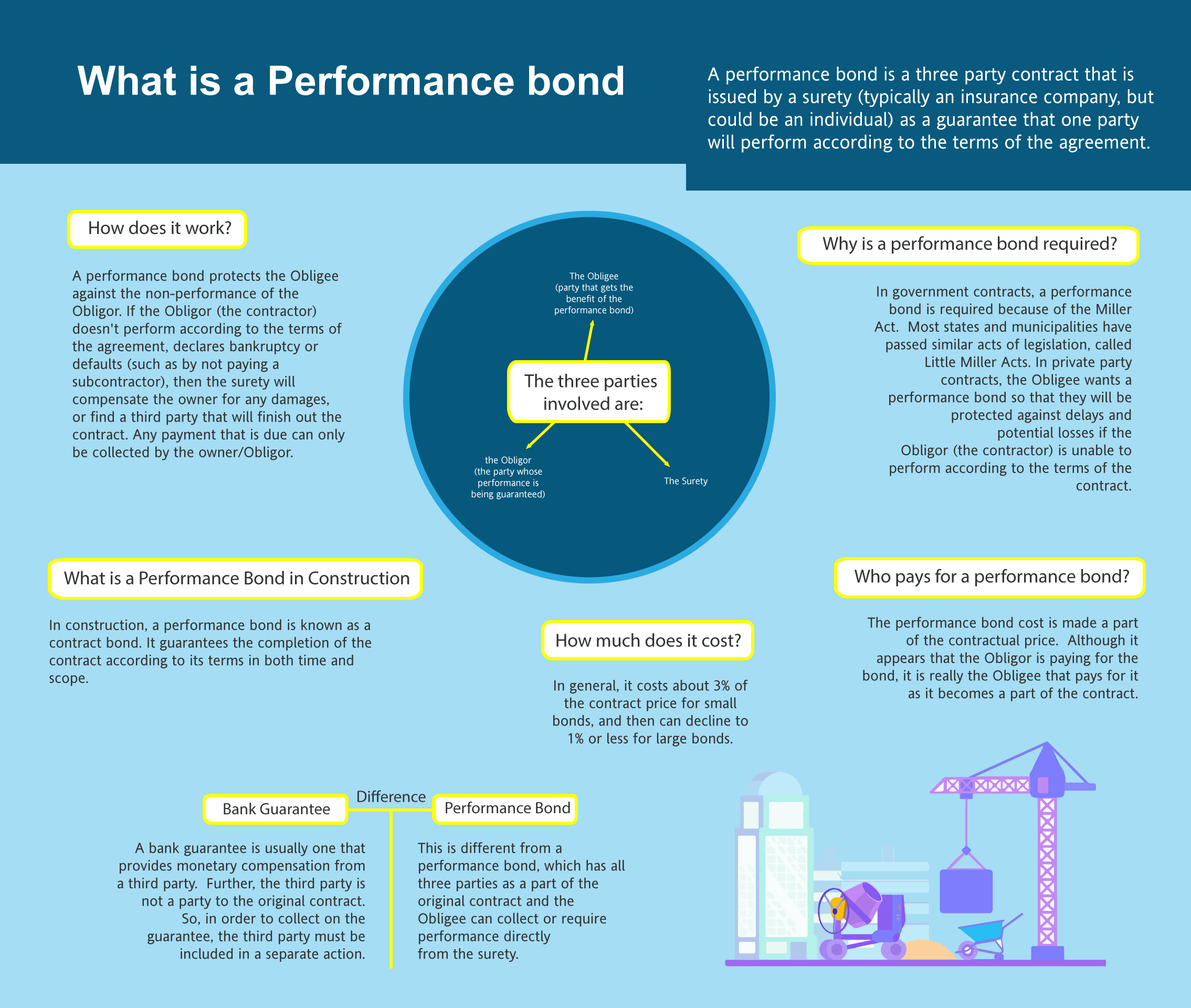
A performance bond is a financial instrument provided by an insurance company or bank to guarantee satisfactory completion of a project by a contractor. If the contractor fails to meet the specified terms of the contract, the bond can be called upon to compensate the project owner.
Types of Performance Bonds
Bid Bonds: These are submitted along with bids for projects to assure that if selected, the bidder will enter into the contract. Performance Bonds: This type guarantees that the contractor will complete the contract as per its terms. Payment Bonds: These ensure that subcontractors and suppliers will be paid for their work on the project.How Do Performance Bonds Work?
When a contractor applies for a performance bond, they typically undergo a rigorous underwriting process. Insurers assess various factors including creditworthiness, experience, and financial stability before issuing the bond.
Understanding Risk Management in Depth
Risk management involves identifying, assessing, and mitigating risks that could negatively impact an organization’s ability to achieve its objectives.
Importance of Risk Management
- Decision-Making: Effective risk management provides critical insights necessary for informed decision-making. Financial Stability: It safeguards assets and ensures long-term financial health by preventing unexpected losses. Compliance: Proper risk management helps organizations adhere to legal regulations, reducing liabilities.
Components of Risk Management
Risk Identification: Recognizing potential risks that could affect operations. Risk Assessment: Evaluating risks based on their likelihood and potential impact. Risk Mitigation Strategies: Developing plans to minimize identified risks.The Integration of Performance Bonds in Risk Management
Performance bonds inherently function as part of an organization's comprehensive risk management strategy. They mitigate risks associated with non-performance in contractual agreements.
How Performance Bonds Enhance Risk Management
- They provide financial security against contractor defaults. They enhance trust among stakeholders by demonstrating commitment to contractual obligations. They can streamline dispute resolution processes related to performance issues.
The Benefits of Using Performance Bonds
Using performance bonds offers numerous advantages for both contractors and project owners.
For Contractors: Securing More Contracts
Contractors equipped with performance bonds can:
Strengthen their credibility in competitive bidding situations. Expand their operational capacity by taking on larger projects. Foster stronger relationships with clients through demonstrated reliability.For Project Owners: Ensuring Project Delivery
Project owners benefit significantly when requiring performance bonds:
Guaranteed completion reduces financial exposure. Increased peace of mind allows for smoother project execution. Enhanced negotiation power with contractors due to reduced perceived risk.The Role of Regulatory Frameworks in Performance Bonds
Regulatory frameworks play an essential role in governing how performance bonds operate within different industries.
Industry Regulations Affecting Performance Bonds
Various sectors have specific regulations dictating how performance bonds should be managed:
Construction Public procurement TelecommunicationsThese regulations ensure transparency and protect all parties involved in contractual agreements.
Case Studies Demonstrating The Relationship Between Risk Management and Performance Bonds
To truly understand how these concepts interact in real-world scenarios, let's explore some case studies where performance bonds played crucial roles within risk management more info frameworks.
Case Study 1: Municipal Construction Project
In this scenario, a city awarded a construction contract without requiring a performance bond, leading to significant delays and budget overruns due to contractor default.
Case Study 2: Private Sector Supplier Agreement
A manufacturer engaged multiple suppliers who provided performance bonds as part of their contracts; this ensured timely deliveries and maintained production schedules despite unforeseen challenges.
Key Stakeholders Involved in Performance Bond Transactions
Understanding who participates in these transactions provides insight into how robust systems are established around them.
Primary Stakeholders include:
Contractors Surety companies Project owners Regulatory bodiesEach plays distinct roles that collectively ensure smooth functioning within contractual agreements involving performance bonds.
FAQs About The Relationship Between Risk Management and Performance Bonds
1. What is the main purpose of a performance bond?
The primary purpose is to guarantee that contractual obligations are met; if not fulfilled, it provides financial compensation for non-performance.
2. How does one obtain a performance bond?
Typically through surety companies after undergoing an assessment which includes evaluating past performances and financial stability.
3. Are there costs associated with obtaining a performance bond?
Yes, contractors pay premiums based on contract size, complexity, and credit ratings when acquiring these bonds from sureties.
4. What happens if the bonded party defaults?
The surety company steps in to fulfill obligations or compensates losses incurred due to defaulted contracts up to the bond amount.
5. Can anyone apply for a performance bond?
Not everyone qualifies; applicants usually need proven experience, sufficient capital reserves, and positive credit history before obtaining one successfully.
6. How do performance bonds differ from insurance policies?
While both provide financial protection against losses incurred through failures or defaults, insurance policies do not specifically guarantee contract fulfillment like performance bonds do.
Conclusion
In conclusion, understanding The Relationship Between Risk Management and Performance Bonds is vital for stakeholders across various industries seeking security against uncertainties inherent in contractual agreements. By employing effective risk management strategies coupled with robust tools like performance bonds, businesses can navigate complexities confidently while ensuring successful project outcomes without undue stress or concern over party defaults or failures to deliver on promises made within contracts executed daily globally!
By recognizing both concepts’ interconnectedness—contractual security through sound fiscal instruments paired seamlessly together—organizations may thrive even amidst challenging environments rife with unpredictable obstacles looming just past tomorrow’s horizon!